
TORRENT WORLD
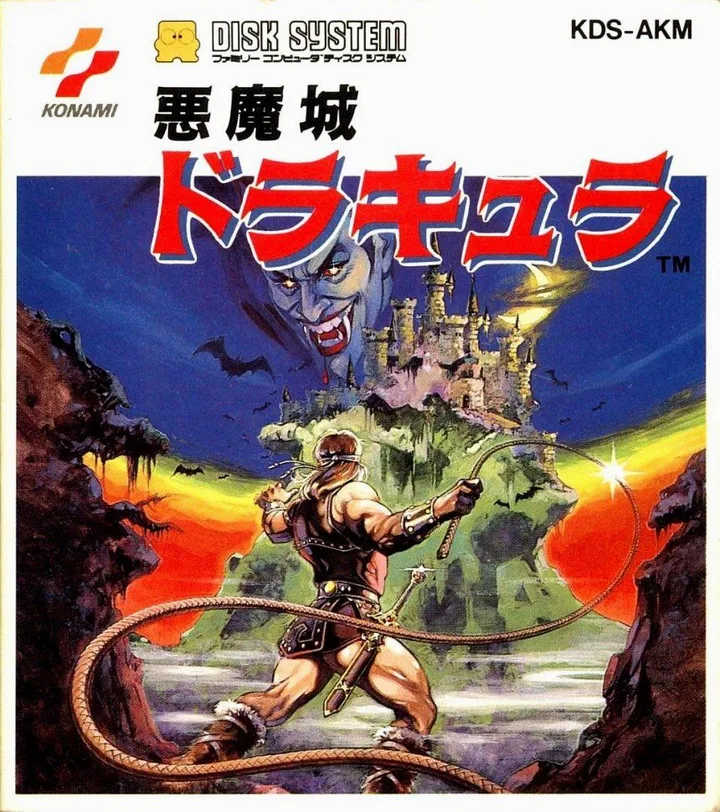
Akumajō Dracula (JP) (Action Platform) (Famicom Disk System)
1986 · action · NES · The Data Archivist V0.01
Source : https://en.wikipedia.org/wiki/Castlevania_(1986_video_game) Castlevania , known in Japan as Akumajō Dracula , [ a ] [ 6 ] is a 1986 action - platform game developed and published by Konami . It was originally released in Japan for the Famicom Disk System in September 1986, [ 7 ] before being ported to cartridge format and released in North America for the Nintendo Entertainment System (NES) in 1987 and in Europe in 1988. It was also re-issued for the Family Computer in cartridge format in 1993. It is the first installment in the Castlevania series. Players control Simon Belmont , descendant of a legendary vampire hunter, who enters the castle of Count Dracula to destroy him when he suddenly reappears 100 years after Simon's ancestor vanquished him. [ 8 ] Castlevania was developed in tandem with the MSX 2 game Vampire Killer , which was released a month later and uses the same characters and setting, but features different gameplay mechanics. It was followed by a sequel, Castlevania II: Simon's Quest , and a prequel, Castlevania III: Dracula's Curse , both of which were also released for the NES. Super Castlevania IV was released in 1991 for the Super NES and follows the same story. A remake, Akumajō Dracula, for the Sharp X68000 home computer was released in 1993, and was later re-released for the PlayStation as Castlevania Chronicles in 2001. Castlevania was a commercial success and received widespread acclaim. It is considered an NES classic by PC World , [ citation needed ] while Nintendo Power and Game Informer both ranked it in their lists of the best video games ever made. [ citation needed ] Gameplay The top of the screen displays the player's current score, time remaining, stage, health, current sub-weapon and sub-weapon ammo, as well as how much health the boss has. Here, the player character, Simon, is whipping an enemy. Castlevania utilizes platform gameplay and is divided into six blocks of three stages each, for a total of 18 stages. Simon can move, jump, crouch, climb stairs and use a magic whip (known in the series as the "Vampire Killer") as his primary combat weapon. When the player presses the button to crack the whip, there is a short delay before Simon actually does so. [ 9 ] The player begins the game with four lives and five hearts, and must complete the current block of stages before a timer runs out. Simon has a health meter, which decreases whenever he is hit by an enemy or projectile. One life is lost if either the meter or the timer reaches zero, if Simon falls off the bottom of the screen, or is hit by a moving spiked ceiling. Hidden food items restore health, and bonus lives are earned at certain score thresholds. The player fights a boss character, usually themed after a classic horror movie monster such as Frankenstein's monster or the Grim Reaper , at the end of each block, and must win the battle and pick up a red orb that restores all health before time runs out in order to advance. The ultimate goal is to defeat Count Dracula himself and the Curse of Man at the end of Stage 18, triggering the collapse of Dracula's castle and allowing the player to restart the game at an increased difficulty. Throughout the game, the player can find and use various backup weapons, including throwing knives, axes, vials of holy water that act as fiery grenades, a magical watch that can briefly freeze enemies, and sacred crosses that function as boomerangs. However, only one such weapon can be carried at a time; if the player picks up a new one or loses a life, the weapon is automatically lost. Backup weapons require hearts for their use, which can be found by extinguishing candles or defeating enemies with the whip. Other hidden items include point bonuses (money bags, crowns, chests), temporary invincibility (golden jar), upgrades to the whip's length and power (metal chain), instant destruction of all on-screen enemies (blue rosary ), and double or triple use of any backup weapon except the watch. When all lives are lost, the player has the option to continue from the start of the block or return to the title screen. Castlevania North American NES box art Developer(s) Konami Publisher(s) Konami Nintendo (arcade, GBA) Director(s) Hitoshi Akamatsu Producer(s) Akihiko Nagata Designer(s) Akihiko Nagata Programmer(s) Nobuhiro Matsuoka Artist(s) Noriyasu Togakushi Composer(s) Kinuyo Yamashita [ 4 ] [ 5 ] Satoe Terashima [ 4 ] Series Castlevania Platform(s) Family Computer Disk System , Nintendo Entertainment System , Arcade , C64 , Amiga , MS-DOS , Mobile phone , Game Boy Advance , Windows Release September 26, 1986 Famicom Disk System JP : September 26, 1986 NES/Famicom NA : April 30, 1987 [ 2 ] PAL : November 1988 [ 1 ] JP : February 5, 1993 [ 3 ] Arcade NA : 1987 C64, Amiga, MS-DOS NA : 1990 PAL : 1990 (C64 only) Mobile phone JP : 2002 NA : July 7, 2004 PAL : 2004 Game Boy Advance JP : August 10, 2004 NA : October 25, 2004 PAL : January 7, 2005 AU : November 24, 2005 Genre(s) Action
Internet Archive
en
- Download torrent · en · 528945 bytes
1e67078b01df4b4ecc700649835271b8df906474
Related titles