
TORRENT WORLD
Ogre Battle - The March of the Black Queen (FR,JP,US) (Tactical RPG) (Super Nintendo)
1993 · role-playing · PlayStation · Super Nintendo · NES · The Data Archivist V0.01
MANUAL : JP : https://archive.org/details/densetsu-no-ogre-battle-the-march-of-the-black-queen-sfc-hiresscans/Densetsu%20no%20Ogre%20Battle%20-%20The%20March%20of%20the%20Black%20Queen%20-%20Manual/ US : https://archive.org/details/snes_Ogre_Battle_The_March_of_the_Black_Queen_USA VIDEO LONGPLAY : https://archive.org/details/SNES_Longplay_271_Ogre_Battle Source : https://en.wikipedia.org/wiki/Ogre_Battle:_The_March_of_the_Black_Queen Ogre Battle: The March of the Black Queen [ b ] is a 1993 real-time tactical role-playing game developed by Quest Corporation . Originally published for Super NES by Quest in Japan and by Enix America in North America. It is the first installment of the Ogre Battle series. It was directed by Yasumi Matsuno , and designed by Matsuno with Akihiko Yoshida . The story of Ogre Battle focuses on a band of rebels as they lead a revolution against a corrupt reigning Empire, ruled by an evil Empress. Ogre Battle was ported to the Sega Saturn and PlayStation , with enhancements made to the original gameplay. It was later released for Virtual Console , and mobile phones . A successor, Tactics Ogre , was released in 1995 for the Super NES. Gameplay Top: Moving across the stage map. Bottom: A battle scene taking place. (SNES version) Ogre Battle: The March of the Black Queen begins in the outskirts of the Zeteginean Empire, [ c ] twenty-four years after the founding of the empire through conquest. The main character is leading a revolution against this empire, which has turned to evil through the use of black magic by the mage Rashidi. The main character's name and gender is chosen by the player, and called the "Opinion Leader" in the instruction manual. The game begins with the seer Warren using tarot cards to ask a series of questions to determine the player's suitability as leader of the revolution. There are several questions out of a fixed set which are randomly asked, each of which is associated with one of the twenty-two Major Arcana cards of divinatory tarot . The player's answers to these questions determine the Opinion Leader's abilities and starting units. Ogre Battle mixes movement elements of a real-time tactics game with the character development and combat of a role-playing game . The game consists of a series of battles in which the player deploys units to fight against enemies and liberate occupied towns and temples. On the world map, the player can manage their characters, change their class, equip equipment, and choose the next stage to proceed to. Picking an already completed stage will not respawn the main enemies, although neutral monsters may still be there. The player is free to organize multiple squads of five fighters or fewer, with some large characters such as dragons or griffons counting as two for the purpose of squad size. Time passes on the tactical map, alternating between day and night. Time of day has several effects; for example, vampires and werewolves only function during the evening, with the former appearing in coffins during the day, and the latter appearing as normal men. Deploying a squad costs a small amount of money, which must be paid again as maintenance every time a day passes. Towns and temples on the map can be liberated by units, and retaken by Zeteginea if left undefended. Upon liberation, a random tarot card is drawn, which can have a variety of effects. Liberated towns also provide income when a day passes. Some towns have shops where money can be spent on consumable items and equipment. Also, some towns and temples are hidden and do not display on the initial map; only moving a unit over the area will reveal it, as well as hidden caches of treasure. Each stage has a boss; defeating the boss completes the mission. Both during and after the stage, towns and temples can be visited to gain information or items. There are twenty-five main stages in the game, with some variation possible in how the stages are played. There are also four hidden stages accessible through the main game with an additional stage as an easter egg . [ 3 ] The game can be completed without finishing all the stages. There are thirteen different endings to the main game, depending on the conduct of the player during the course of the game. [ 4 ] Battle Each stage has a number of enemy units that attempt to re-capture the player's towns and temples. If two units move close to each other, a battle ensues. During a battle, the view shifts to a close-up view of the two combatant units. Characters alternate taking actions with the battle ending after one round of combat (many units can attack multiple times per round). The unit that caused the most damage is the victor and forces the other unit to retreat. During a battle, a player does not directly control their unit, but selects a tactic for the unit to follow (Best, Strong, Weak, Leader), which the characters follow when choosing whom to attack. The player can also use stored tarot cards, which can cause damage or have a
Internet Archive
en
- Download torrent · en · 20442041 bytes
947225f4c70359b985f9a5a3f1770a245bbd3e7d
Related titles
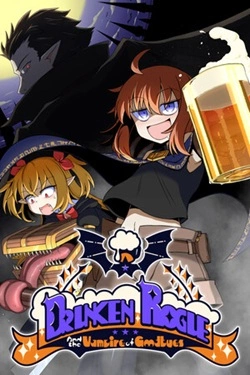
Drunken Rogue
2026
Alcohol does not hinder the heroine from fighting here, but rather becomes the source of her strength. The stronger Lita is drunk, the more powerful her abilities become.
Open card
Deep Blue Sushi
2026
Before diving, you can select the necessary equipment for a specific task. Some tools help catch fish, others will be useful
Open card
Home Store Simulator
2026
Planning plays a crucial role in daily work. You can independently decide where to place items, how to organize passages and ca
Open card
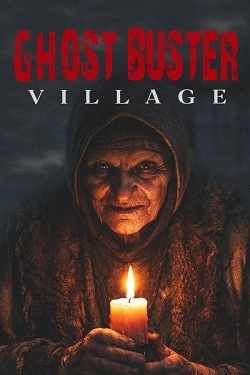
Ghost Buster:Village
2026
The environment gradually reveals the history of this place through unusual details. Old amulets hang on trees, rituals remain in the houses
Open card
Mall: Tidy Up Together
2026
In the shopping center, there are 3682 different products distributed among stores of various categories. There is a supermarket
Open card