TORRENT WORLD
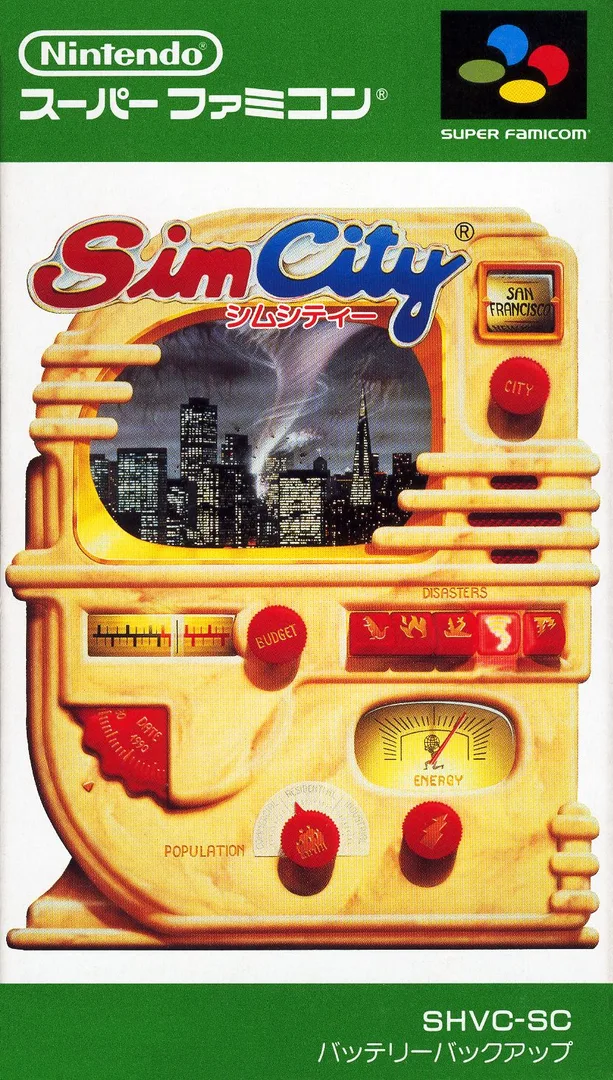
SimCity (EU,FR,GE,JP,US) (City Builder) (Super Nintendo)
1991 · simulation · Super Nintendo · NES · Arcade · The Data Archivist V0.01
MANUALS : (US) : https://archive.org/details/sim-city-usa/mode/2up (DE) : https://archive.org/details/sim-city-snes-deutsche-spielanleitung/mode/2up Source : https://en.wikipedia.org/wiki/SimCity_(1989_video_game) SimCity , also known as Micropolis or SimCity Classic , [3] is a city-building simulation video game developed by Will Wright , and released for several platforms from 1989 to 1991. SimCity features two-dimensional graphics and an overhead perspective. The game's objective is to create a city , develop residential and industrial areas, build infrastructure , and collect taxes for further city development. Importance is placed on increasing the population 's standard of living, maintaining a balance between the different sectors, and monitoring the region's environmental situations to prevent the settlement from declining and going bankrupt. SimCity was independently developed by Will Wright , beginning in 1985; the game was not released until 1989. [2] [4] Because the game lacked any arcade or action elements that dominated the video game market in the 1980s, video game publishers declined to release the title for fear of its commercial failure until Broderbund eventually agreed to distribute it. Although the game initially sold poorly, positive feedback from the gaming press boosted its sales. After becoming a best-seller, SimCity was released on several other platforms, most notably on the Super Nintendo Entertainment System (SNES) in 1991. Its gameplay was significantly revised with Nintendo 's involvement. SimCity sold 300,000 units for personal computers and nearly 2 million units for the SNES. SimCity was met with critical acclaim for its innovative and addictive gameplay despite the absence of action elements. Reviewers considered the game instructive and helpful toward the player's understanding of urban planning, politics, and economics. SimCity received numerous awards from news publishers and associations. The success of SimCity marked the beginning of the urban simulation genre of video games, as well as publisher Maxis ' tradition of producing non-linear simulation games, one of which – The Sims – would surpass all its predecessors in popularity and become one of the best-selling franchises in the video game industry. Gameplay The core concept of SimCity is to build and design a city without specific goals to achieve. The player may divide land into commercial, industrial, or residential zones , add buildings, change the tax rate, build a power grid, build transportation systems and take any other actions to enhance the city. Once able to construct buildings in a particular area, the too-small-to-see residents, known as "Sims", [5] may choose to construct and upgrade houses, apartment blocks, light, heavy industrial buildings, commercial buildings, hospitals, churches, and other structures. The Sims make these choices based on such factors as traffic levels, availability of electrical power, crime levels, and proximity to other types of buildings—for example, residential areas next to a power plant will seldom appreciate the highest grade of housing. [6] In the SNES version and later, the player can also build rewards when they are given, such as the mayor's mansion or a casino . The player may face disasters including floods, tornadoes , fires (often from air disasters or shipwrecks ), earthquakes and monster attacks. In addition, monsters and tornadoes can trigger train crashes by running into passing trains. Scenarios SimCity features goal-oriented, time-limited scenarios that are contingent on the player's performance and could result in either a win or a loss. The implementation of scenarios was suggested by Broderbund, as a means of transforming SimCity into a more traditional game format. This addition was intended to enhance the overall experience for players, by introducing clearly defined objectives and increasing the level of challenge in the game. [7] In SimCity, the initial cities were modeled after real-world cities and endeavored to replicate their general layout. Although the majority of scenarios featured in the game exist within a fictional timeline or involve a city besieged by an imaginary catastrophe, a select few are based on genuine historical events. This incorporation of actual historical events adds a unique layer of realism to the game and enables players to engage with significant moments in history in a novel way. Ports and versions Super Nintendo SimCity for the SNES features the same gameplay and scenario features; however, since it was developed and published by Nintendo , the company incorporated their own ideas. Instead of the Godzilla monster disaster, Bowser of the Super Mario series becomes the attacking monster, and once the city reaches a landmark 500,000 populace, the player receives a Mario statue that can be placed in the city. The SNES port also features special buildings the player may receive as rewards, such as casinos, large parks, amusem
Internet Archive
en
- Download torrent · en · 4799057 bytes
1fb160bd4cd7d1842fbbe5edf03751a8f3f894e2
Related titles
Funtography: A Gameboy Cameradventure (1.4 &1.5)
2025
Welcome to the DrachmoSoft®️ TheamatOS™️ ! Enjoy the luxuries of a true modern 1989 Operating System. And there's also a game preinstalled in there for some reason? In Funtography , enjoy looking at 100+ Gameboy Camera pictures as you explore various urban vistas to solve the mystery of a missing vi
Open cardOsta 0.1.20
2025
The latest public demo version of the upcoming Militaria collecting simulator Osta https://forgottencup.itch.io/osta Wishlist: https://store.steampowered.com/app/3997240/Osta/
Open cardYandere Simulator Pool Party Resurfaced Mod
2025
Yandere Simulator: Pool Party Resurfaced (2025 Mod Remake) The original mod is made by Monsterette and can be found on their channel. (Credits are all listed in the mod file) (Archived incase of deletion)
Open cardQuarantine Zone: The Last Check (Pre-release Demo) Ver 20385961
2025
Archived Steam demo for Quarantine Zone: The Last Check dated Oct 14th, 2025. The demo was made temporarily available during a Steam free-weekend and was subsequently de-listed. It may contain content different from the final game as it was released a few months prior. It's a zombie survival managem
Open cardSubstrate Emergence
2025
v0.0.2a-2 "Mutagenesis" " This is a very early, rough prototype. Expect bugs, performance issues, and limited content." " Note on Mac and Linux: Builds are compiled directly from Unity for these platforms with no modifications and are not supported. Platform specific bugs won't be fixed. Mac require
Open card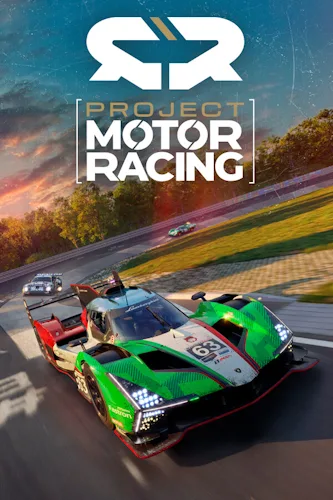
Project Motor Racing - Year 1 Bundle
2025
Charm, drive, and the passion of professional motorsport. The new standard of racing simulators with legendary car brands and tracks.
Open card