
TORRENT WORLD
The Executioner, Starring Sonny Chiba, And Yasuaki Kurata (aka Bruce Lo... Lol)
KonCategoryIII
Review Emi (Yutaka Nakajima) is ordered by former police commissioner Arashiyama (Ryo Ikebe) to bring three persons to him to deal with the drugs-mafia led by Mario Mizuhara (Masahiko Tsugawa) and organized around the daughter of the Latin American ambassador (-). The first on Arayashima’s list is Ryuichi Koga (Sonny Chiba), a descendent and heir of the Koga Ninja family. Ryuichi is, day in and day out, subjected to his grandfather’s harsh and strict training. He wants to escape his grandfather’s grasp, but that appears, at first glance, to be impossible. The second person on the list is Takeshi Hayabusa (Makoto Satō), a former police narcotics squad section chief turned lone wolf assassin. His motto is, as quickly becomes evident, to take his payments in advance and to always complete his jobs. The third is Ichiro Sakura (Eiji Go), a former instructor at the Japanese Aikido Dojo. Due to his incontrollable lewdness and his violent impulses, he awaits his execution at Miyamori prison. The Executioner is an enjoyable martial arts narrative sprinkled with unobtrusive light-heartedness and some surprising silliness. The light-heartedness within the narrative is mainly function of the clashing of personalities of Koga, Hayabusa, and Sakura and the banter and interactions that are born from their frictions. The effectivity of the interactions to put a smile on the face of the spectator proves that there is a functional chemistry between the lead-actors. The Executioner has a simple narrative structure – the opening half an hour is spent on setting the stage (i.e. introducing the leads with their peculiar traits and the villains to be squashed). Such uncomplicated and straight-forward structure works well for Ishii’s action film as it prepares the spectator for the action-to-come and to fulfill the main reason why the spectator has come. The simple nature of the narrative also means that The Executioner , while heavy on action, is not heavy thematically speaking. It touches, like many of Ishii’s narratives, on the exploitative tendencies of male subjects – i.e. women are used as objects so that men can satisfy their sense of importance and affirm their position of power and desire, and the many violent confrontations powerfully echoes the competition of being the strongest that mark many male interactions. The narrative fleetingly evokes, not unlike many other narratives of the same era, a conflictual tension between modernity and traditionalism. that continues to mark Japanese society. This tension not only made present visually (e.g. the contrast between high-rise buildings of Tokyo and the temple-like building of the Koga family), but also forms the core of the conflict between Ryuichi Koga and his grandfather. When Ryuichi rebelliously states that science is all-powerful today, he does so not only to weasel out of his grandfather’s strict training, but to radically put the figure of the traditional father into question. In other words, he utilizes the promise of modernity in an attempt to confront his grandfather with his own fallibility and to highlight the uselessness of learning the secret knowledge of the Koga’s Way Of The Ninja. Yet, his grandfather, who fully embodies the traditional spirit, quickly silences Ryuichi with his verbal elegance (e.g. science is a constantly revised hypothesis, the way of the Ninja is all about forging of a superhuman intellect and an indomitable spirit through years of discipline, … etc.) and his fighting prowess. And while he desires to dismiss his grandfather’s words, they might have their use in the challenges that await him. The main thread that structures the narrative is the dimension of righteousness – we can’t let the mafia poison Japanese people with cocaine . Takeshi Hayabusa is, as character, most marked by such sense of righteousness and duty. While his work as assassin-to-hire could have easily poisoned his feeling of justice, he safeguards its by radically relying on the symbolic pact of a contract and advance-payments. In this way, he avoids having to deal with the ethical dimension of his murderous acts and the contracts he receives – it is just business. The former police commissioner is, in this respect, driven by a similar sense of duty or, at least, appears so (Narra-note 1). For the two others, it is not duty nor honour that binds them to the mission. For Koga, who is in debt, the promised money for helping Sakura escape as well as the threat of being sent to prison for having done so forces him to join the commissioner’s plan. And for Sakura, it is the subtle sexual teasing by Emi that persuades him to join the honourable crusade against the American-Japanese drugs-mafia. The visual pleasure of The Executioner is determined by Ishii’s composition as well as its approach to the lighting-design. With respect to the composition, Ishii does not merely fluidly combine static and dynamic shots, but thoughtfully uses cinematographic tools (e.g. close-ups, zoom
Internet Archive
en
- Download torrent · en · 2321547264 bytes
f8a5f2093c0e272563342f8f95fcbdce5423f15c
Related titles
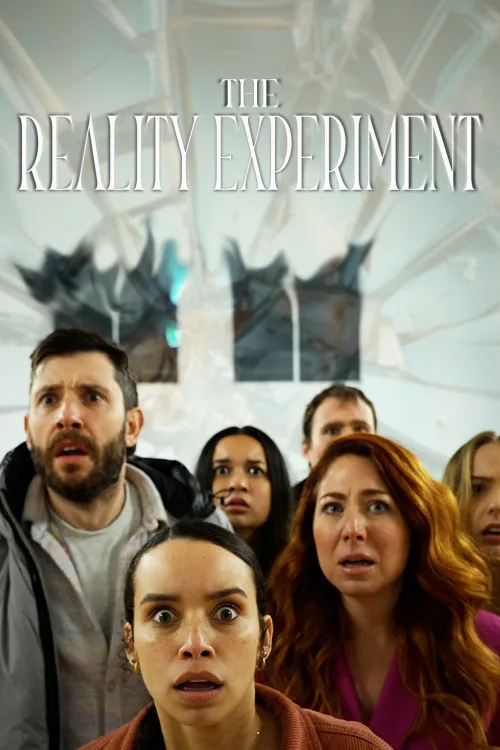
The Reality Experiment
2026
Eight strangers gather for an unknown experiment at the University for a quick payday. However, things rapidly get out of control as reality itself begins to turn on them.
Open card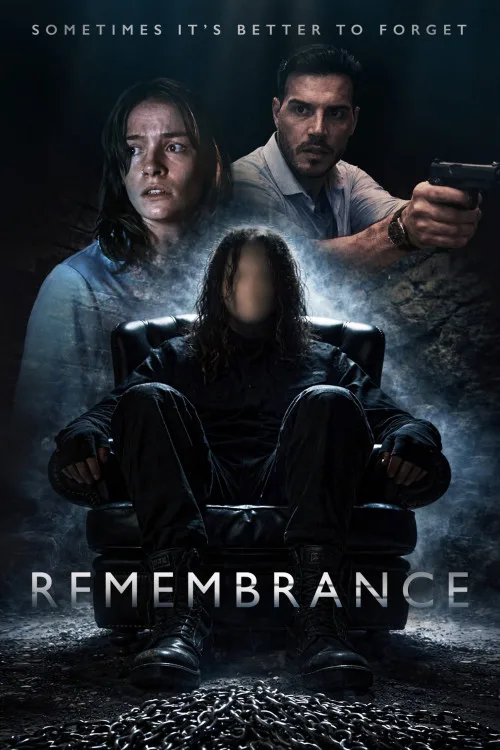
Remembrance
2026
Grace, escapes captivity, wakes with no memory. Detectives Isaac and Amanda investigate, uncovering her past and her kidnapping. Grace's hallucinations strain Isaac's connection with her, while Amanda questions her reliability.
Open card
Horrorcane
2026
A couple rents a south Florida estate with an antique mirror that opens to other dimensions, including a demon realm with no escape. Vengeful contractors, supernatural beings, and a psychotic realtor add chaos as a mega storm approaches.
Open card

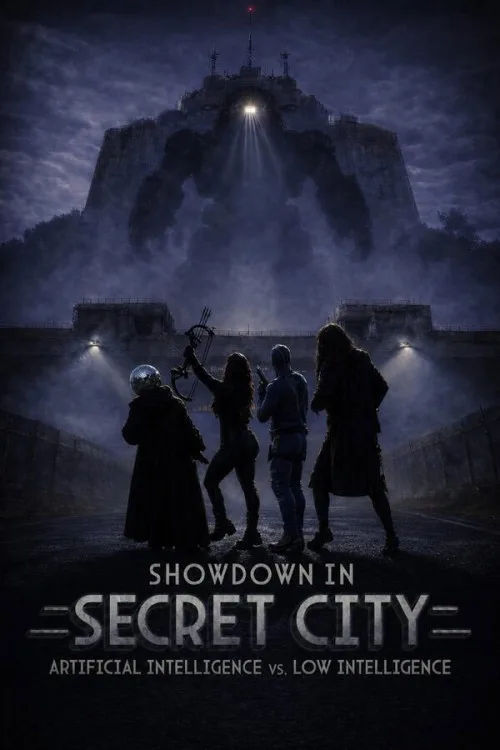
Showdown in Secret City
2026
Four filmmakers are forced to comply with a movie executive's demands to create a blockbuster with the help of artificial intelligence or else.
Open card
The Guard Room
2026
Hilda gets a job as an overnight security guard at a rundown warehouse district. She soon discovers that a security officer mysteriously died in the parking lot, and starts to unravel the clues while surviving the shifts.
Open card