
Bad Girl Office
2026
A high-class jewel thief is coached by a unique educator, hired to reform her and set her straight. But when she uses her charm, the tables are turned, and the educator confronts his life choices.
Open card ARTICSTRACKER
2008 · Annette Mari Olsen & Katia Forbert Petersen
My Iranian Paradise (Mit Iranske Paradis) (2008) Directed by: Annette Mari Olsen & Katia Forbert Petersen Date of birth: 1947, Denmark Country: Denmark Language: Farsi / Danish Runtime: 78 minutes Released: 2008 Genre: Documentary My Iranian Paradise A personal, creative documentary about the connections between Iran and the Western world, seen through the eyes of ordinary people. The director lived in Persia, present day Iran, for the first 22 years of her life. For her, it was the happiest place under the sun â today it is included in Bushâs âAxis of Evilâ. Compelled to draw a line from the past to the present, she travels back to Iran. Through recent footage from the closed and inaccessible country and an abundance of rare and unique historical footage, the film uses the personal story of the director to illustrate not only aspects of present day Iran but also a crucial part in the countryâs history â the time up to the Islamic Revolution, just as oil began to play its part in history. Understanding past Iran will expose the present. My Iranian Paradise depicts a peopleâs condition in the shade of politics â and in the light of history. Annette Mari Olsen Directors: Katia Forbert Petersen & Annette Mari Olsen Producers: Annette Mari Olsen, Karen Hjort & Katia Forbert Petersen Produced by: Sfinx Film/TV with the support of: The Danish Film Institute, Nordic Film- and TV foundation, Images of the Middle East, The MEDIA Programme (EU Development & EU Broadcast funding) & DR. In association with: YLE, TVP, LRT, ETV & BHT. Duration: 58 min. & feature (75-85 min.) Year of Production: 2008 Original Title: Mit Iranske Paradis Release: September 2008 My Iranian Paradise is a personal film about Iranian history and Persian culture by a Danish filmmaker who spent most of her childhood and youth in Tehran. Annette Mari Olsen relates the grand narrative through small stories, as always in close collaboration with co-director Katia Forbert Petersen. The two have teamed up in Danish documentaries for more than 20 years around a shared ambition to promote understanding and build bridges between cultures. The two women filmmakers first met in Poland, at the film school in Lodz, in the early seventies, and later hooked up again in Denmark. Katia Forbert Petersen originally fled Poland with her parents in the late sixties and has since, mainly lived in Denmark, working as a photographer, director and producer. The child of a Danish-Polish couple who met in Iran, Annette Mari Olsen lived 22 years in Iran in her childhood and youth. After years of preparation, she has now made a film about her former homeland, My Iranian Paradise. Since starting Sfinx Film in 1988, the two filmmakers, who mainly speak Polish in the office,have produced a variety of stories about people living in the modern, multicultural reality. A significant vision for Sfinx Film/TVâs productions, they say, is promoting insight into and understanding of what happens when people from different cultures meet. They know it from their own lives, and say, smiling, âInsight and understanding, thatâs what we hope our new film will give the audience.â Axis of Evil Olsen is also the filmâs central character. Taking the audience back in time through her own familyâs history, she offers a far more nuanced image of a country that George W. Bush has branded a member of the âAxis of Evil.â The film features a wealth of characters that Olsen meets on her way â men, women, families, children, women in chadors, a dervish â all held together by Olsenâs monologue referring to her familyâs history and reflecting on present-day Iran. âMy father was a guest worker and my mother was a refugee,â Olsen narrates, framing the film in the story of her father, a Danish engineer who goes to Iran for the Kampsax company to work on the famed trans-Iranian railroad. When his stint ends, her father stays in Iran. He meets a Polish woman, a survivor of Stalinâs gulag who ended up in hospitable Iran on her way back to Poland, like so many other Poles. They marry and have Annette, who enjoys a happy childhood and youth in her beloved Tehran, a city she returns to in her new film. Her family remains in Tehran until shortly before the revolution and Khomeiniâs takeover in 1979. Only a pretext Annette Olsen (AO): My familyâs history and mine are only a pretext to say whatâs on our minds. We wanted to craft a nuanced worldview in a film that speaks about the past but points to the future. Katia Forbert Petersen (KFP): We both grew up in systems that have collapsed. We wanted to convey how fragile an individual is in relation to the big political picture, so we used the personal story, as seen through Annetteâs eyes, to follow the development of a country that the West has had very close ties to historically, but the younger generations only know very little about. It sounds to me that you have a message? KFB: Open your eyes. See whatâs going on in the world. Take a sta
598d886391376130aa7c9a2e7e0013ae9e90e05520fd79304038b35191aa29a59614f2e48830f7262026
A high-class jewel thief is coached by a unique educator, hired to reform her and set her straight. But when she uses her charm, the tables are turned, and the educator confronts his life choices.
Open card
2026
A doctor is led into a web of betrayal by his nurses on a fateful night shift at a mysterious hospital.
Open card
2026
Two college girls staying at a guesthouse encounter a dangerous mythical serial killer.
Open card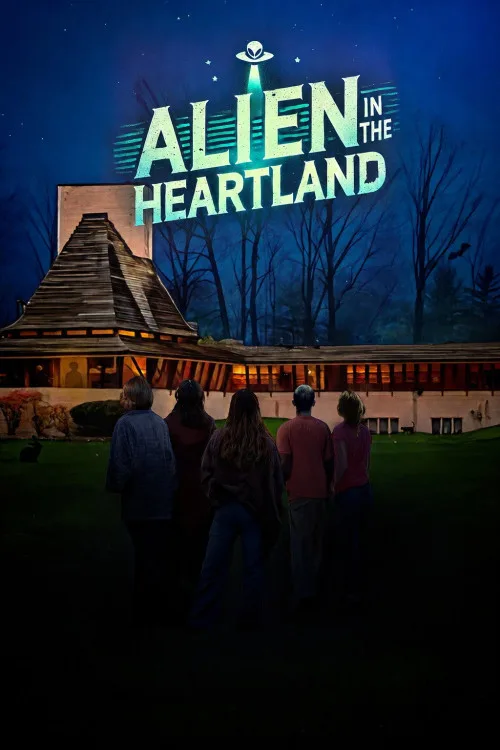
2026
Amidst growing fears of an alien invasion with shapeshifting capabilities, a paranoid widower imprisons two sisters seeking refuge, convinced one is an extraterrestrial.
Open card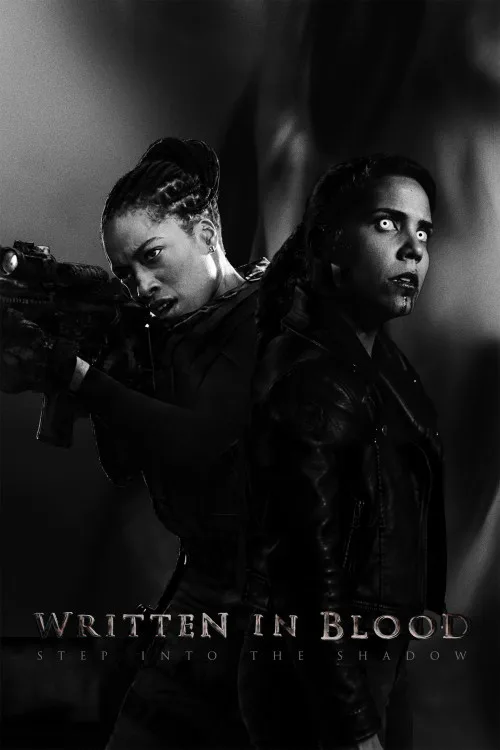
2026
When Selena's family is wrongfully executed by the Mexican Cartel, she wages a violent war against their leader, Lucas Almonte. She forms an unexpected alliance with Nuevo Laredo Police Detective Alex, who has her own demons to face.
Open card
2026
A man documents his wife's cancer-until a terminal diagnosis leads him to an ancient ritual to summon the Devil and make a deal. His footage spirals into a chilling record of kidnapping, demonic rituals, and the price of desperation.
Open card
2026
A zombie outbreak happens at local strip club. Patrons and dancers attempt to survive.
Open card
2026
Two Florida Man vigilantes hunt for a psychopathic serial killing clown.
Open card ARTICS TOOLSОнлайн-инструменты для работы с изображениями, файлами, QR-кодами и веб-технологиями.
 ARTICSNETДомены, хостинг, DNS, SSL, электронная почта и управление интернет-сервисами в единой платформе.🚧 Скоро запуск · В разработке
 ARCTICS NETWORKПроверка IP-адресов, доменов, DNS-записей и диагностика сетевых подключений.