
Rubber Nose Massacre
2026
Two Florida Man vigilantes hunt for a psychopathic serial killing clown.
Open card ARTICSTRACKER
Mikhail Kalatozov
Mikhail Konstantinovich Kalatozov (Georgian: მიხეილ კალატოზიშვილი, Russian: Михаил Константинович Калатозов; 28 December 1903 – 26 March 1973), born Mikheil Kalatozishvili, was a Soviet film director of Georgian origin who contributed to both Georgian and Russian cinema. He is known for his films The Cranes Are Flying (1957) and I Am Cuba (1964), winning the Palme d'Or for the former at the 1958 Cannes Film Festival. Kalatozov received the State Stalin Prize in 1951. In 1969, he was named a People's Artist of the USSR. Salt for Svanetia [Соль Сванетии | Sol' Svanetii ] (1930) An ethnographic treasure that documents with visual bravado the harsh conditions of life in the isolated mountain village of Ushkul. Nail in the Boot [Гвоздь в сапоге | Lursmani cheqmashi ] (1931) Due to unusable boots, the worker has no time to transmit an important report during training maneuvers, and the crew of the armored train 'dies' in a conditional gas attack. The hero ends up in the dock, but the tribunal, as it turns out, is guilty itself: it includes the team of the 'dead' armoured train, which includes shoemakers who made defective boots. Courage [Мужество | Muzhestvo ] (1939) [ no subs ] A British Army officer resigns, burning his last-day summons to war in the Sudan. Accusing him of cowardice, his girlfriend and three friends give him white feathers. To gain redemption, he shadows his friends to save their lives. Valery Chkalov [Валерий Чкалов] (1941) Based on the true story of Russian pilot Valeri Chkalov (1904–1938), who set several long-distance flight records. Chkalov and co-pilots Baidukov and Belyakov altogether had accomplished several nonstop long-distance flights. In June 1937, Chkalov set the world record, covering 12,000km in 63 hours of nonstop flight from Moscow to Vancouver, Washington, flying over the North Pole. Hostile Whirlwinds [Вихри враждебные | Vikhri vrazhdebnye ] (1953) [ no subs ] Observing the first years of the formation of Soviet power, about the life and work of Feliks Dzerzhinsky from 1918-1925; in July 1918, as a result of a revolt of the Left Socialist Revolutionaries, German ambassador Mirbach is killed. Feliks Dzerzhinsky alone goes to the headquarters of the Left Socialist Revolutionaries and Anarchists, he manages to persuade ordinary soldiers and sailors, participants in the rebellion, who are now cracking down on their leaders. True Friends [Верные друзья | Vernye druz'ya ] (1954) Alexander, Boris and Vasily are old friends, who now rarely see each other as they're busy with their professional life. They embark on long-planned voyage on a raft down the Volga river, which turns into a series of comical accidents but also strengthens their friendship. The First Echelon [Первый эшелон | Pervyy eshelon ] (1955) [ no subs ] In one of the steppe regions of Kazakhstan arrives a Komsomol youth squad. Severe frosts, spring mud flows, exhausting work than their specialty – the development of virgin land doesn't come easy. But the young are young – they work, enjoy life, fall in love. In the center of the story is the touching romance secretary of the Komsomol organization and tractor driver Anne. The Cranes Are Flying [Летят журавли | Letyat zhuravli ] (1957) Veronika and Boris come together in Moscow shortly before WWII. Walking along the river, they watch cranes fly overhead, and promise to rendezvous before Boris leaves to fight. Boris misses the meeting and is off to the front lines, while Veronika waits patiently, sending letters faithfully. After her house is bombed, Veronika moves in with Boris' family, into the company of a cousin with his own intentions. Letter Never Sent [Неотправленное письмо | Neotpravlennoye pismo ] (1959) Four geologists search for diamonds in the wilderness of Siberia. After a long and tiresome journey, they manage to find their luck and put the diamond mine on the map, which must be shipped back to Moscow. But on the day of departure, a terrible forest fire wreaks havoc, and the geologists are trapped. I Am Cuba [Я — Куба | Ya — Kuba ] (1964) Four vignettes on the lives of pre-revolutionary era Cuban people; in Havana, Maria is ashamed when a man she loves discovers how she makes a living. Pedro, an old farmer, discovers that the land he cultivates is being sold to an American company. A student sees his friends attacked by the police while they distribute leaflets supporting Fidel Castro. Finally, a peasant family is threatened by Batista's army. The Red Tent [Красная палатка | Krasnaya palatka ] (1969) Torn by personal guilt, Italian general Umberto Nobile reminisces about his 1928 failed Arctic expedition aboard the airship Italia.
ru
1cf9e23bd82f08066e7888c85fe06f34e38cc3932026
Two Florida Man vigilantes hunt for a psychopathic serial killing clown.
Open card
2026
When his platoon is ambushed during WWII, an American medic must evade the enemy in the nearby forest, unaware that something else lurks there.
Open card
2026
When a delusional killer in a cowboy costume starts treating a small town like his personal shooting range, two bumbling detectives must track him down and free his captive bride before he kills again.
Open card

2026
Following the adoption of 16-year-old Sophie, Hope begins to suspect her new daughter is hiding a terrible secret that will endanger her family.
Open card
2026
In the gripping thriller Fettered, sixteen-year-old Paris from the Bronx wakes up completely disoriented in a dense, remote forest, chained to a tree and bleeding heavily from a gunshot wound. With no memory of how she got there or who attacked her, she is thrust into a desperate fight for survival
Open card
2026
Across a dying Earth and the far reaches of space, humanity faces its final tests. Stranded astronauts, desperate survivors, conflicted pilots and an isolated diplomat must decide what is worth saving before time runs out.
Open card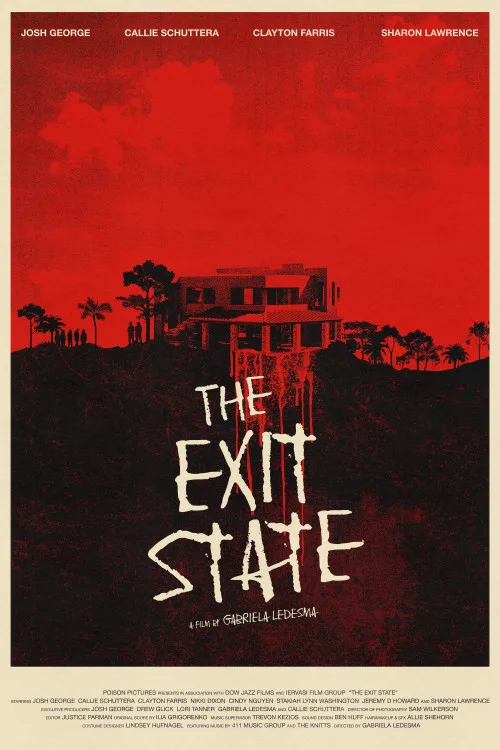
2026
In the not-too-distant future, a group of American citizens attempt to flee the country to escape an authoritarian regime, but their path to freedom quickly becomes a dystopian nightmare.
Open card ARTICS TOOLSОнлайн-инструменты для работы с изображениями, файлами, QR-кодами и веб-технологиями.
 ARTICSNETДомены, хостинг, DNS, SSL, электронная почта и управление интернет-сервисами в единой платформе.🚧 Скоро запуск · В разработке
 ARCTICS NETWORKПроверка IP-адресов, доменов, DNS-записей и диагностика сетевых подключений.