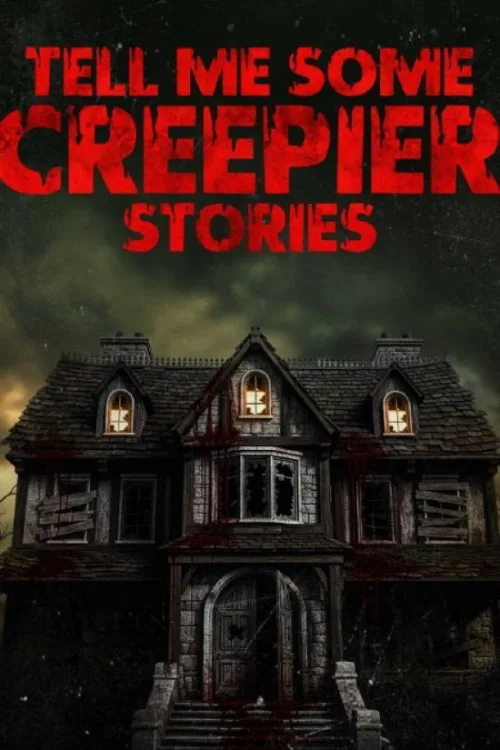
Tell Me Some Creepier Stories
2026
A chilling anthology returns: animalistic rites, a possessed war hero, and a growing curse that twists bodies.
Open card ARTICSTRACKER
Dziga Vertov
Denis Arkadyevich Vertov (born David Abelevich Kaufman; 21 December 1895 – 12 February 1954), better known as Dziga Vertov, was a pioneering Soviet documentary filmmaker, as well as a cinema theorist. His filming practices and theories influenced the cinéma vérité style of documentary filmmaking and the Dziga Vertov Group, a radical cooperative active from 1968–72. He was a member of the Kinoks collective, with Elizaveta Svilova and Mikhail Kaufman. Vertov's younger brothers Boris Kaufman and Mikhail Kaufman were also noted filmmakers, as was his wife, Yelizaveta Svilova. He worked with Boris Kaufman and cinematographer Mikhail Kaufman on his most famous film Man with a Movie Camera . Anniversary of the Revolution [Годовщина революции, Godovshhina revoljucii ] (1918) A chronicle of the Russian Revolution of 1917, from the bourgeois democratic February Revolution to the great socialist October Revolution and the final triumph. Give Us Air! [Даешь воздух!, Daesh vozdukh! ] (1923) An anthology of three parts focusing on early aviation, aircraft, airports, and the avant-garde theatrical work of Vsevolod Meyerhold. Soviet Toys [Советские игрушки, Sovietskie igrushki ] (1924) The first animated film made in the Soviet Union portrays a bloated caricature of a Capitalist devouring a massive heap of food and drink. Kino-Eye [Киноглаз, Kinoglaz ] (1924) Promoting the joys of life in a Soviet village centering on the activities of the Young Pioneers. These children are constantly busy, pasting propaganda posters on walls, distributing hand bills, exhorting all to 'buy from the cooperative' as opposed to the Public Sector, promoting temperance, and helping poor widows. Experimental portions, projected in reverse, feature the un-slaughtering of a bull and the un-baking of bread. Stride, Soviet! [Шагай, Совет!, Shagay, sovet! ] (1926) Commissioned as both a documentary and an information film for the citizens of Moscow prior to municipal elections, a tableau of Soviet life and achievements in the period of reconstruction following the Civil War of 1917-1921. A Sixth Part of the World [Шестая часть мира, Shestaya chast mira ] (1926) Through the travelogue format, the multitude of Soviet peoples in remote areas of USSR and detailed the entirety of the wealth of the Soviet land. Focusing on cultural and economic diversity, it is in fact a call for unification in order to build a 'complete socialist society'. The Eleventh Year [Одиннадцатый, Odinnadtsatyy ] (1928) A presentation of the hard labour of countrymen in industrial production to strengthen the USSR economy and turning their country into a world power. Man with a Movie Camera [Человек с киноаппаратом, Chelovek s kinoapparatom ] (1929) A cameraman wanders around with a camera slung over his shoulder, documenting urban life with dazzling inventiveness. Enthusiasm: Symphony of Donbas [Ентузіязм. Симфонія Донбасу, Entuziazm (Simfoniya Donbassa) ] (1931) An audiovisual symphony that delves into the industrial, agrarian, and cultural fabric of the Donbas region during the inaugural Soviet Five Year Plan. It spotlights anti-religious campaigns, propagandistic marches, and the vibrant athletic culture of its time. Three Songs About Lenin [Три песни о Ленине, Tri Pesni o Lenine ] (1934) Three episodes comprise three songs sung by anonymous Soviet peoples about Vladimir Ilyich Lenin. Lullaby [Колыбельная, Kolybelnaya ] (1937) Shot to commemorate the twentieth anniversary of the October Revolution, Dziga Vertov's eye focuses on the women and the role of motherhood, featuring images from across the Soviet Union, in particular the Far East. In the Memory of Sergo Ordzhonikidze [Серго Орджоникидзе, Sergo Ordzhonikidze ] (1937) Archival footage of Ordzhonikidze, scenes from his funeral in Moscow, and speeches by his grieving colleagues, including Joseph Stalin and Nikita Khrushchev. In the Height of Area A [В районе высоты А, V rayone vysoty A ] (1941) Produced just months before the German invasion of the Soviet Union, Vertov's documentary short acts as a journalistic chronicle documenting Soviet Red Army soldiers, defensive tactical operations, and artillery movements. For You at the Front! [Тебе, фронт!, Tebe, front! ] (1942) From the start, Vertov made himself known as an irreconcilable enemy of 'acted films', which he regarded as a violation of truth. At the peak of WWII, however, such lofty artistic principles proved impractical.
ru
01ea78af51ae68cb6b866413b53d5ddbb9bc920b2026
A chilling anthology returns: animalistic rites, a possessed war hero, and a growing curse that twists bodies.
Open card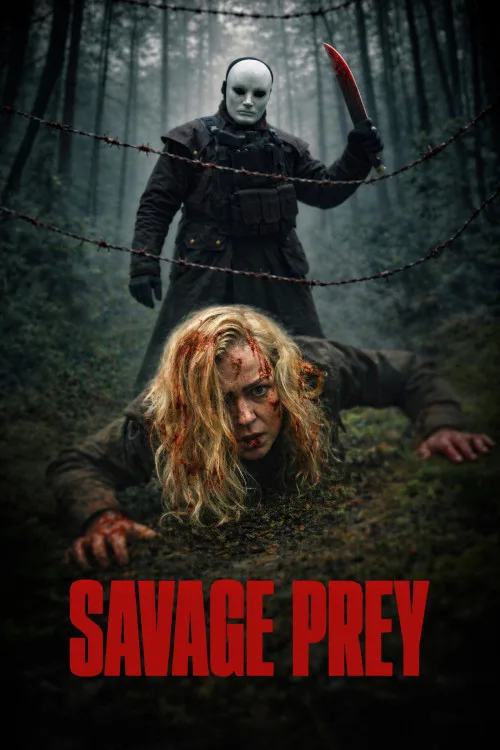
2026
In the remote Scottish Highlands, a desperate mother searches for her missing son, finding herself trapped in a twisted struggle for survival.
Open card
2026
Two decades after "The Swan" shocked audiences, the women who underwent extreme makeovers and the show's creators reunite to examine the reality series that transformed their lives and sparked debate about beauty standards in America.
Open card
2026
A man awakes from a coma to find that his well-being is now the responsibility of an avatar provided by the government.
Open card
2026
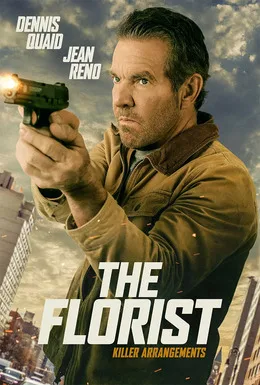
A quiet gardener who leads a secret life as a hitman discovers that his true identity is threatened when he forms an unexpected friendship with a corrupt police witness.
Open card

2026
A filmmaker applies lessons from a Hallmark movie writing workshop to pitch a documentary about concrete.
Open card ARTICS TOOLSОнлайн-инструменты для работы с изображениями, файлами, QR-кодами и веб-технологиями.
 ARTICSNETДомены, хостинг, DNS, SSL, электронная почта и управление интернет-сервисами в единой платформе.🚧 Скоро запуск · В разработке
 ARCTICS NETWORKПроверка IP-адресов, доменов, DNS-записей и диагностика сетевых подключений.