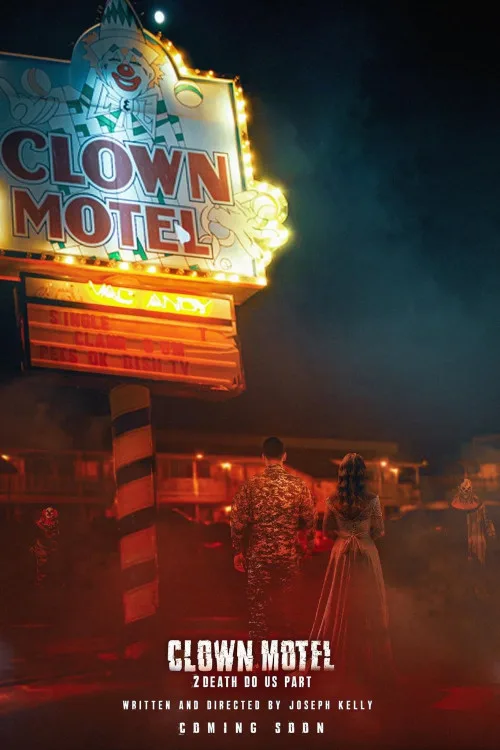
Clown Motel 2
2026
The search for Brooke is in full swing when her fiance gets new intel on her possible whereabouts. Gathering a group people, they enter the Clown realm where Brooke and Jane Doe have been trapped.
Open card ARTICSTRACKER
KonCATIII
Kwan Tak-hing returns to his iconic role as Master Wong Fei-hung in this late-70s kung fu classic from director Jeong Chang-hwa ( King Boxer ). Master Wong takes a new student (Carter Wong) under his wing after the young man is soundly beaten by a mercenary master (Hwang In-shik) skilled in hapkido. Meanwhile, Master Wong’s friend is being threatened by a local crime boss who wants to use his factory for opium-related shenanigans, and has hired the renegade hapkido master as his enforce he Skyhawk AKA Wong Fei-hung travels to Thailand to visit an old friend, Chu. Accompanied by his student Fatty (Sammo Hung), he encounters and rescues Leo (Carter Wong) after he is injured in a fight. Chu is finding that his shipping business is being threatened by local rival Ku. Fatty’s sister Yu Ying is also in Thailand but has developed a gambling addiction that is putting him into debt and in danger as the gambling den is run by Ku. Ku hires a mercenary fighter (Hwang In-sik) to take care of his enemies and bribes some of Chu’s workers to betray him. Skyhawk tries his best to refrain from conflict but his students keep ending up in fights with Ku’s men even when seeking to avoid trouble themselves. Chu finds Ku needs his shipping business to ship opium, triggering several tragedies and Skyhawk alongside Leo being forced to take revenge. Kwan Tak-hing was approaching 70 years of age when this production was made. Whilst he may not have been the most skilled fighter to portray the figure of Wong Fei-hung, he definitely gets the essence of him. His is the classic figure, embodying Confucian virtues, seeking peaceful resolution over conflict. There is one moment where his reluctance to fight is mistaken for fear by others but he never seeks to challenge this. We have a more meditative figure here as befits his age. There are several scenes set in the temple and is accompanied by a more wistful version of the “General marching under orders” theme that is so associated with Wong Fei-Hung. Even in the final confrontation, he shouts out to Leo not to kill one of Ku’s henchmen. A small touch that adds to the overall portrayal. Even the ending is slightly more subtle. Whilst, like most kung fu genre pictures, it ends with the surviving heroes walking away, it takes time here for him to check on the daughter of the recently seen friend he had come to visit. This very rarely happens elsewhere, usually it’s roll credits as soon as the bag guy expires. Alongside him, to make up more of the physicality, is a very young Sammo Hung as Wong’s student Fatty and Carter Wong’s Leo, a man whom they rescue after an early fight. Sammo Hung was at the outset of his career here, frequently playing the supporting role as a headstrong student of a master that rarely saw the end credits roll. He’s essentially the same here, but does try to act on his master’s wishes and avoid fighting where possible. It’s a generic role but he does the best with what he can even if the 1970’s hair-do does look a little out of place. Carter Wong is always a stern presence. My personal opinion is he was best suited to villainous roles due to his intensity and eyebrows that have more acting ability than many of his contemporaries! That aggression actually fits here as his Leo is less controlled than the others and demonstrates less restraint. Nora Miao’s “romance” with Leo is limited to just slight glances and never really goes anywhere. Standing out on the other side of the fence is Hwang In-sik. The 1970’s saw several Korean fighters make their name in Hong Kong cinema and he was one of the best. His mercenary is the polar opposite in virtue, fighting of some thugs chasing a woman they plan to see to Japan, he hands her back when made a good financial offer to join Ku. His boot work is as always clean and swift, which makes for a suitably dangerous antagonist. Ku and his cohorts are the stereotypical bad guys. Unredeemable and into every vice conceivable. The direction by Jeong Cheung-hwa is a step up from the usual standards we see in the genre at this time. There is the usual trademark shots as seen in every one of these features, but the camerawork for the most part remains fluid and the Thailand setting gives it a slightly different feel. The costume design is a bit erratic, possibly, but who ever watched these for exact period detail? The action choreography of which Sammo Hung was involved is also a step up from the standard. You have several excellent participants in Hung, Carter Wong and Hwang In-sik, so for the most part it’s clear, varied and feels a bit more impactful. Where it slightly struggles is in the climax. The fight clearly is switching from location to a studio setting and back, whether that was due to the humidity impacting on Kwan Tak-hing I don’t know but it is fairly obvious. Whilst for his age he was still incredibly agile, it is also very evident that he is understandably doubled for the more acrobatic elements. His fight scenes are largely
en
46ee1f806abe9efebfe66d143a4377ddeb55086d2026
The search for Brooke is in full swing when her fiance gets new intel on her possible whereabouts. Gathering a group people, they enter the Clown realm where Brooke and Jane Doe have been trapped.
Open card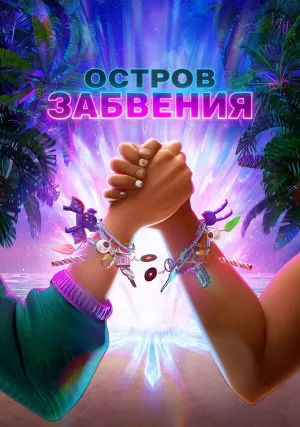
2026
Two best friends become stranded on the mystical world of Nakali, where their only escape might cost them their shared lifetime of memories.
Open card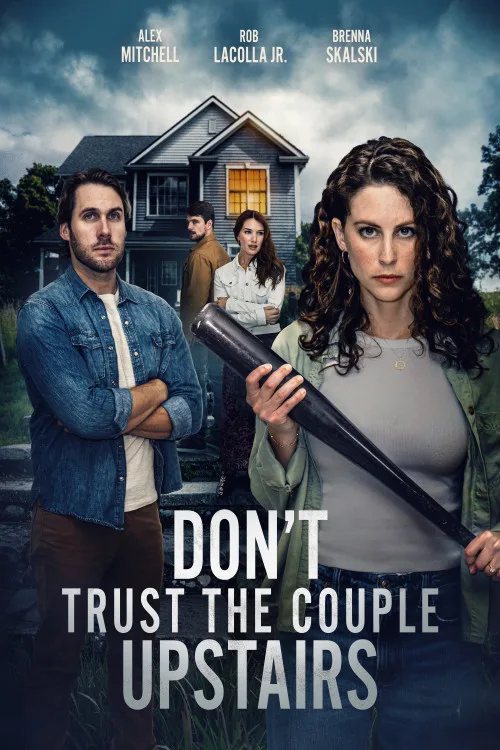
2026
Newlyweds move to a rural farmhouse and rent to a couple. When the female tenant dies mysteriously and her partner disappears, the wife questions her husband's involvement as evidence emerges.
Open card
2026
Sisters Elinor and Marianne Dashwood must leave their Sussex estate to live with a distant relative, while facing both romantic and financial struggles.
Open card
2026
After the 9/11 attacks, no one could agree what should be done with Ground Zero. And so New York did something really crazy. They asked the people to decide.
Open card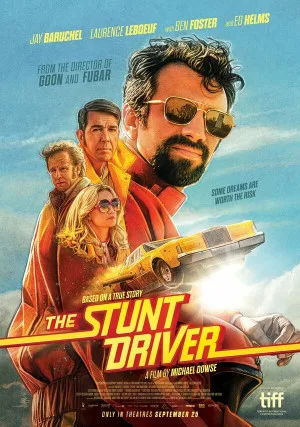
2026
The film tells the story of how the daring stunt driver Ken Carter in the 1970s attempts to perform a bold trick — jumping on a jet-powered car across the Saint Lawrence River from Canada to ......
Open card

2026
Instadocs goes inside the rape investigation and Jane Doe lawsuit at Cornell University, with the student journalists at the forefront of the story.
Open card ARTICS TOOLSОнлайн-инструменты для работы с изображениями, файлами, QR-кодами и веб-технологиями.
 ARTICSNETДомены, хостинг, DNS, SSL, электронная почта и управление интернет-сервисами в единой платформе.🚧 Скоро запуск · В разработке
 ARCTICS NETWORKПроверка IP-адресов, доменов, DNS-записей и диагностика сетевых подключений.